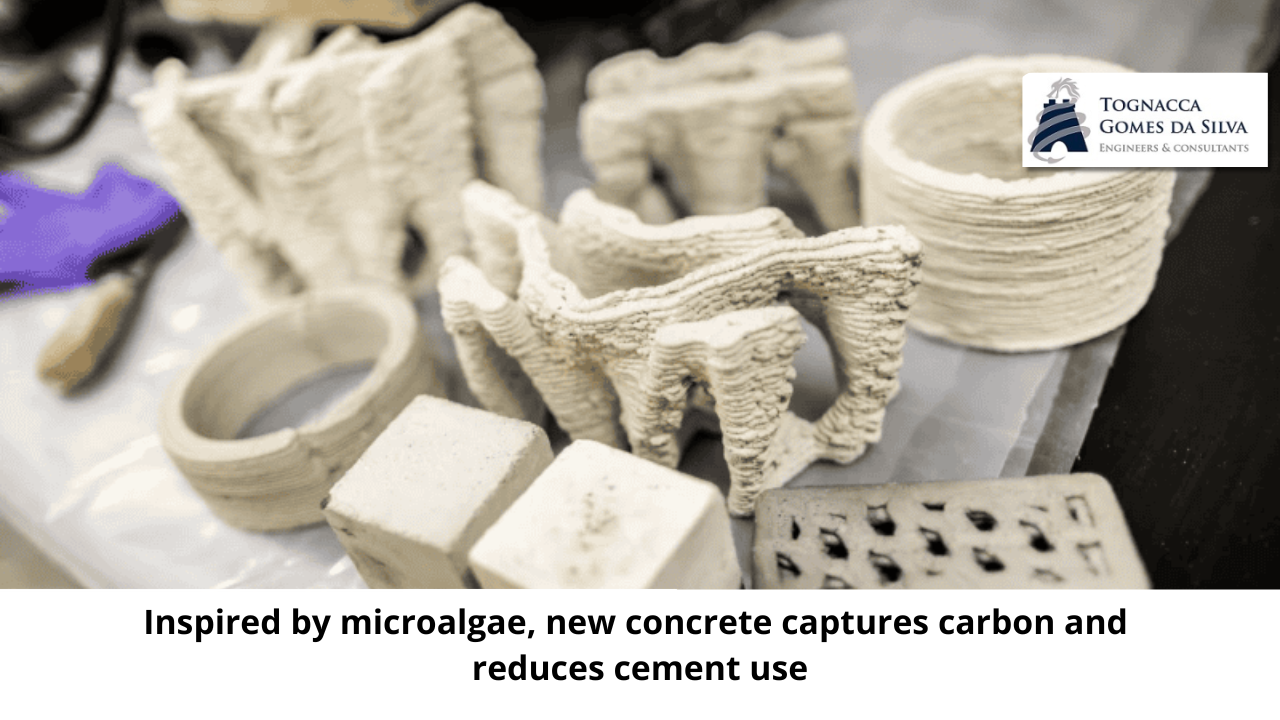



A group of scientists from the University of Pennsylvania (UPenn) has developed a new type of concrete that combines lightness, structural strength and the ability to capture large amounts of carbon dioxide from the atmosphere – up to 146% more than conventional concrete.
The innovation uses complex geometric shapes inspired by the fossilized structures of diatoms, marine microalgae known for their highly porous and symmetrical silica shells.
The process of creating the “concrete of the future”:
- The material was created based on diatomaceous earth (TD), a substance made of fossilized remains of diatoms.
- This component, combined with a refined design via 3D printing, allowed the formation of light, porous and surprisingly resistant structures.
- “Normally, if you increase porosity, you lose resistance. But here the opposite occurred,” says Shu Yang, senior co-author and head of UPenn’s Department of Materials Science.
- The process included the use of a specially formulated cement paste, applied in 3D printers to generate shapes called TPMS – structures inspired by bones and shells.
- The design maximized the surface area, favoring the absorption of CO2 and maintaining structural integrity with up to 68% less material.
- In addition, the curing of the material contributed to the formation of calcium carbonate, which further increased its resistance.
- “We managed to do much more with much less,” said Masoud Akbarzadeh, also co-author.
Next steps of the project
The team is now working on expanding the use of new concrete for applications on facades, floors and support structures, in addition to exploring formulas without cement or with industrial waste. “When we start to see concrete as a dynamic material, new possibilities arise,” Yang concludes.
( fontes: olhar digital )