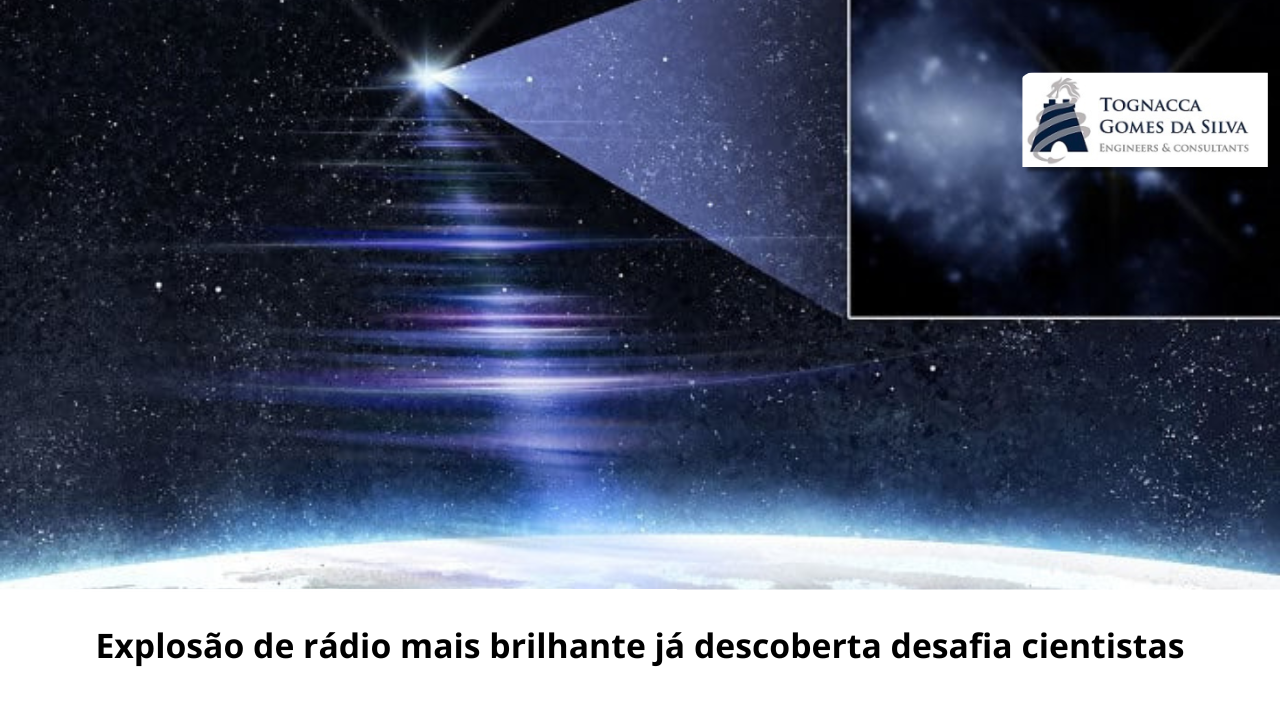



An article accepted for publication by the scientific journal The Astrophysical Journal Letters and available on the arXiv preprint server reports the discovery of the brightest radio explosion of all time. This discovery promises to reveal important details about the origin of the mysterious rapid radio bursts (FRBs).
FRBs are extremely short and intense radio wave pulses that last only a few milliseconds. Despite the short duration, a single FRB can release as much energy as the Sun produces in several days.
They can be repetitive or non-repetitive. The repetitive ones appear periodically and are usually associated with magnetars, neutron stars with extremely strong magnetic fields, whose interaction with another object generates intense flashes. The non-repetitive ones have more uncertain explanations: they can arise from magnetars, neutron star fusions, black holes or supernovaes, and possibly from other still unknown events.
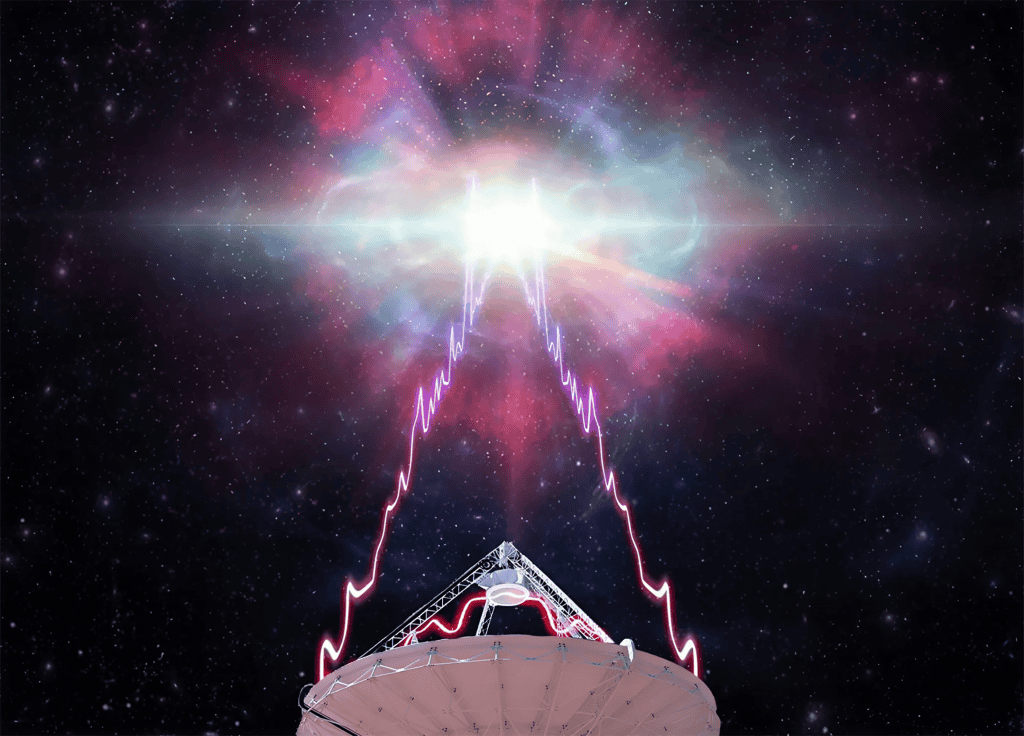
FRB’s region of origin is analyzed in unprecedented details
On March 16 of this year, FRB 20250316A was detected, nicknamed RBFLOAT, acronym for “Radio Brightest Flash of All Time” (the brightest radio burst of all time). It is about a thousand times more intense than the average and comes from the edge of the spiral galaxy NGC4141, in the constellation of Ursa Major, almost 130 million light years from Earth.
“Cosmically speaking, this fast radio burst is very close to us,” said Kiyoshi Masui, associate professor at the Massachusetts Institute of Technology (MIT) in a statement. He points out that this allows studying a common FRB with extraordinary details, something previously impossible with such distant bursts.
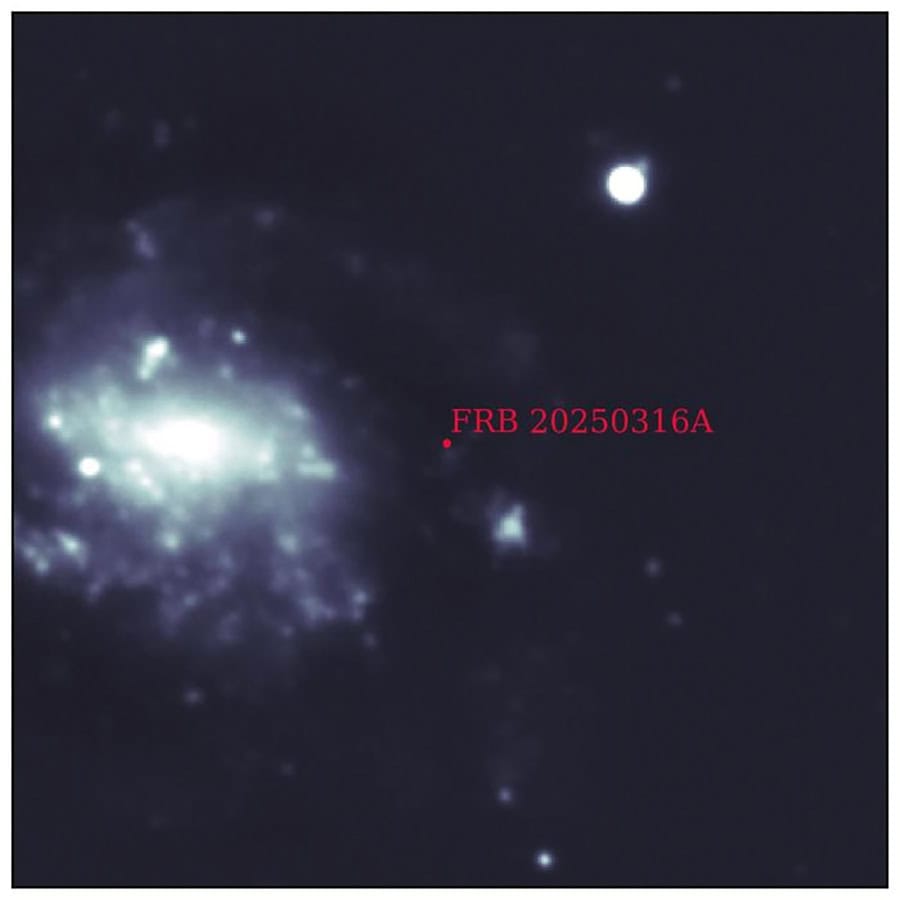
The team was able to analyze the region of origin of the FRB in unprecedented details, restricting the source to an area of about 40 light years. Although it is still not enough to identify the exact object, the research ruled out other nearby radio sources and showed that the burst is not in a star formation region.
Record-breaking radio burst may have come from magnetising
These data reduce the possibility of FRB originating from a recent supernova, but do not eliminate the hypothesis of a compact object. Older magnetars, even outside active areas of stellar formation, can generate extreme events such as RBFLOAT. “With these more accurate observations, we can better understand the diversity of the environments that generate FRBs,” explained Adam Lanman, a postdoctoral student in physics at MIT.
“Imagine that we are in New York and there is a firefly in Florida that shines for a thousandth of a second, which is the normal speed of FRBs,” says Shion Andrew, a graduate student at the institution. “Locating an FRB in a specific part of its host galaxy is like finding out not only from which tree the firefly came, but on which branch it is.” In Brazil, this is comparable to the distance between São Paulo and Porto Alegre, in Rio Grande do Sul.
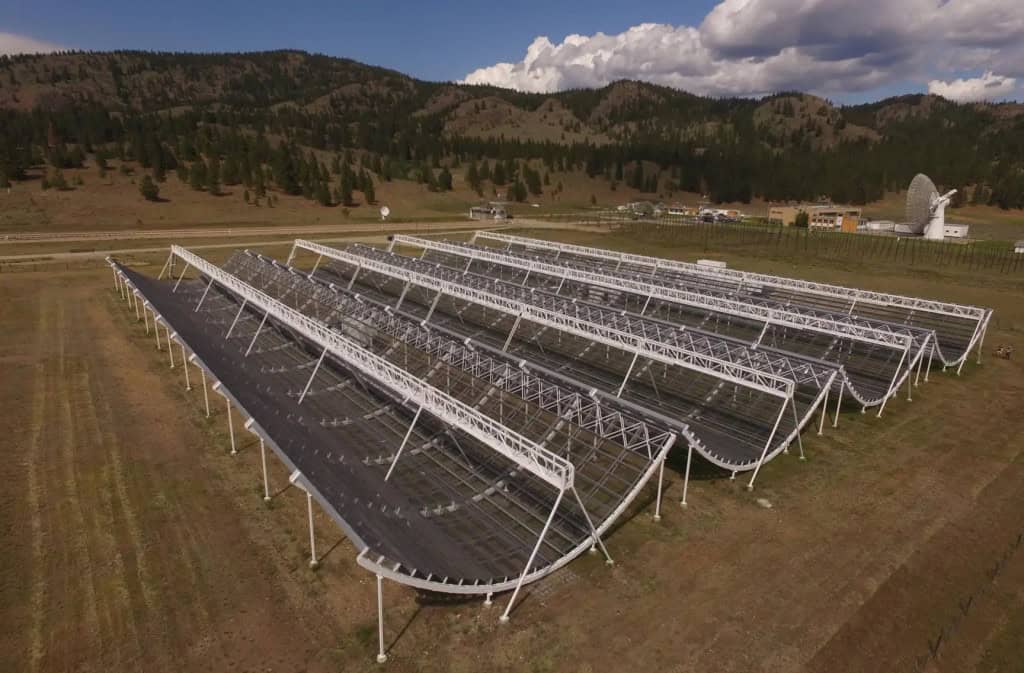
The event was recorded by the Canadian Hydrogen Intensity Mapping Experiment (CHIME), with the support of the OUtriggers CHIME, three miniature observatories spread across North America. Since 2018, CHIME has detected about 4,000 FRBs, and this is the first detection made with the CHIME Outriggers already completed.
fontes: Olhar Digital