



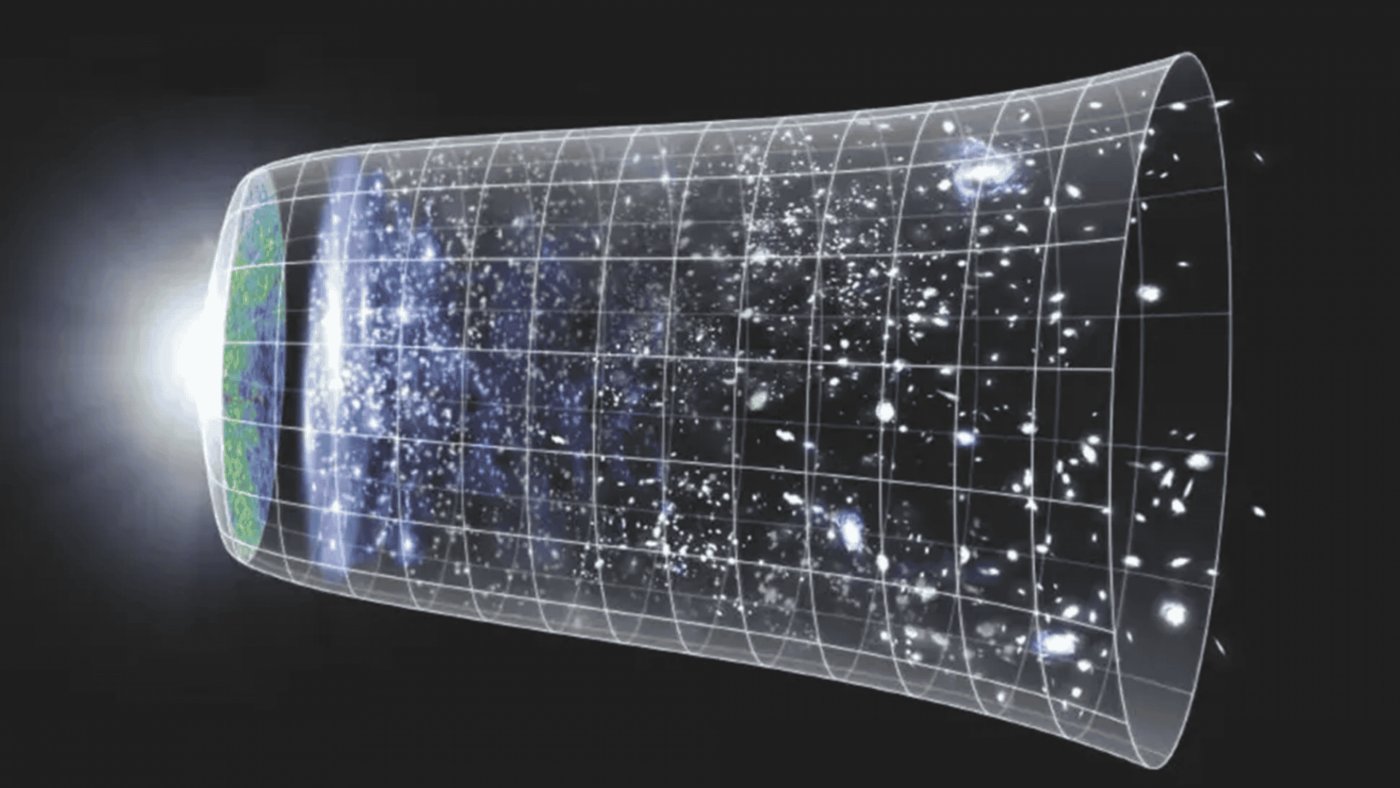
Gravitational Waves: The New Ruler to Measure the Universe’s Expansion
Cosmology faces one of modern science’s greatest challenges: determining the exact rate at which the universe is expanding, a value known as the Hubble Constant. To date, different measurement methods have produced divergent results, creating a crisis in the current cosmological model. Now, researchers suggest that gravitational waves could be the key to resolving this impasse.
By observing violent events in deep space, such as the merger of neutron stars or black holes, gravitational wave detectors can capture the “vibrations” in the fabric of space-time. These events act as “standard sirens,” providing a direct and independent way to calculate the distance of these objects from Earth.
The Advantage of Standard Sirens
Unlike traditional methods that rely on “standard candles” (such as Cepheid stars or supernovae, whose luminosity is estimated and can be subject to interference), gravitational waves offer a precise physical reading of the distance traveled. Since gravity is not obstructed by stellar dust or dark matter, the measurement becomes more reliable.
Toward a Scientific Consensus
With the continuous improvement of observatories like LIGO and Virgo, the expectation is to detect a larger number of merger events in the coming years. By combining these detections with visual data collected by telescopes, astronomers hope to map the pace of cosmic expansion with precision. If gravitational wave data aligns with one side of the current divergence, we may finally update our understanding of the history and fate of the universe.
