



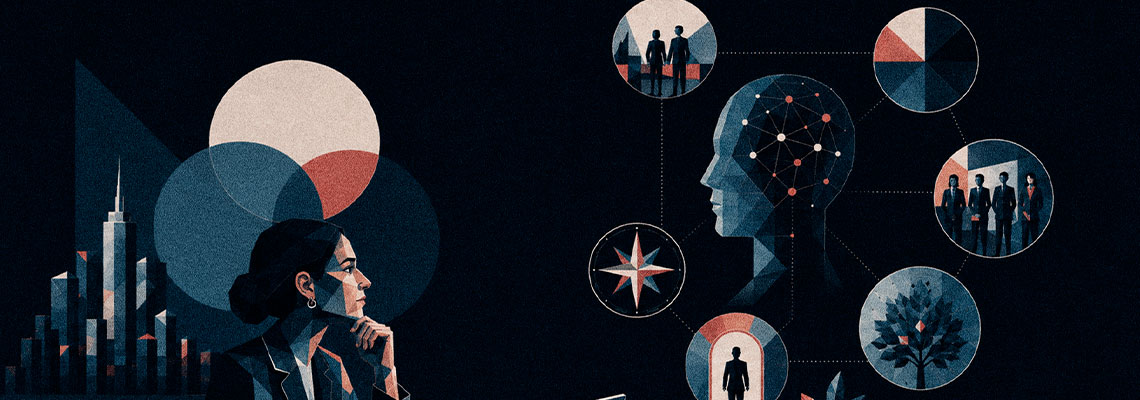
Artificial Intelligence and the Economy of Consciousness: The New Scarcity in the Digital World
For the past two decades, the business model of the digital world was built on a single foundation: the attention economy. Platforms, algorithms, and global corporations waged a daily war for every second of human time. However, as we advance through 2026, the ubiquitous proliferation of Generative Artificial Intelligence is causing a tectonic shift in this model. We are no longer dealing with a scarcity of attention, but rather a much deeper crisis: the scarcity of consciousness.
The End of the Human Cognitive Monopoly
Automation is no longer just a force that replaces manual labor; it has become an entity that outsources cognitive work. Today, AI agents read emails, summarize books, draft complex reports, and even interact with other autonomous agents on our behalf. The machine now holds the capability to pay “attention” to data and process it in a way that is infinitely superior to the biological mind.
When attention and logical intellect are commoditized by technology, what valuable asset remains in the marketplace of ideas? The answer lies in genuine intentionality. Synthetic intelligence may mimic cognitive processing, but it lacks the subjective structure shaped by unconscious drives and the behavioral dynamics that theorists like Freud, Lacan, and Melanie Klein have taught us to observe. It is precisely this “lack”—the human desire rooted in our psychic complexity—that becomes the most scarce and valuable resource in the new economy.
Consciousness as the New Digital Gold
In the “Economy of Consciousness,” the ultimate prize for brands, leaders, and creators is no longer getting someone to stare at a screen (since AI can do that for us), but rather making a human being feel something authentic. Scarcity has shifted from information processing to subjective experience. Corporations are discovering that superficial engagement has lost its market value; what matters now is deep emotional and psychoanalytical resonance with the consumer.
“If artificial intelligence can solve the equation of logic, the economy of the future will be dominated by those who can navigate the labyrinth of human experience and authentic consciousness.”
Business Impact and the Search for Authenticity
The organizations that will survive this transition are those that restructure their value propositions around curating experiences that machines cannot replicate. We are witnessing a growing demand for products, services, and interactions that require non-negotiable human presence. Fields involving clinical empathy, creative brand leadership, moral judgment, and subjective strategy formulation are experiencing an exponential increase in value.
- Automation vs. Subjectivity: Operational systems are delegated to AI, while narrative building and the establishment of trust remain strictly human domains.
- Filters of Humanity: Digital platforms are implementing security protocols not just to block bots, but to validate whether an interaction originates from conscious human intent.
- The Appreciation of the Tangible: The digital exhaustion generated by the excess of synthetic content is driving a renaissance of analog experiences, where human consciousness cannot be simulated.
Conclusion
The transition from attention to consciousness rewrites the rules of cognitive capitalism. True intelligence no longer resides in the ability to accumulate data, but in the wisdom to direct our conscious experience in a world flooded by synthetic minds. Protecting and cultivating this consciousness will be the greatest ethical and corporate challenge of this decade.
