



China and Russia: A New Arctic Route to Avoid Hormuz
Moscow gives Beijing the green light: the first regular container line to Europe along the Northern Sea Route is born – Objective: bypass Suez and the Gulf crisis
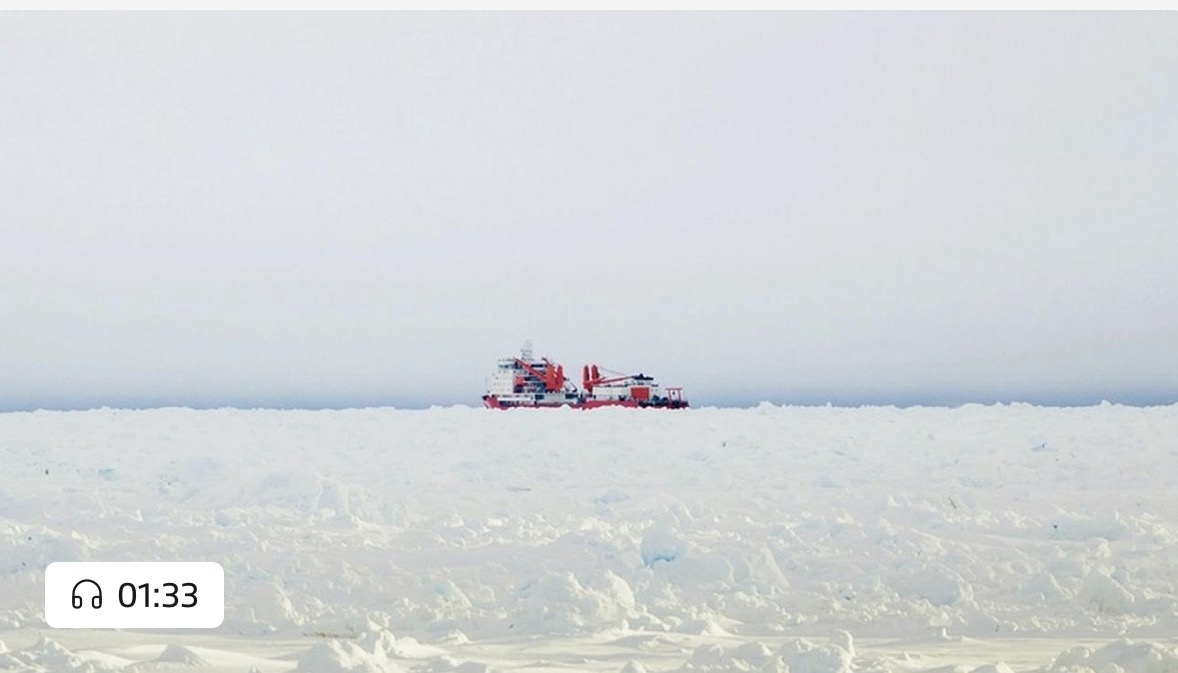
A polar Silk Road to “escape” the Strait of Hormuz. The crisis in the Middle East and the uncertainty surrounding major maritime routes are pushing China and Russia to accelerate the development of an alternative through the Arctic. Moscow’s state-owned giant, Rosatom, has authorized the transit of seven container ships from the Chinese company Sea Legend Shipping along the Northern Sea Route, inaugurating the first regular commercial service between China and Europe on this corridor. Until now, container transport had been limited to experimental shipments or single voyages: by August, however, weekly connections will depart for the entire navigation season.
Image/Mapping Reference: The Arctic maritime routes — The Arctic Institute
The first regular commercial service
The route runs along the north of Russia and is navigable only during the summer months, when melting ice opens a navigation window that has progressively lengthened in recent years, due to climate change. For Beijing, the advantage is clear: a ship takes about 23-25 days to reach St. Petersburg from Shanghai, compared to the 38-45 days required to pass through the Suez Canal. The distance to Northern Europe is reduced by almost a third, yielding savings in fuel, logistical costs, and delivery times. At the same time, increasingly vulnerable passages such as the Red Sea, the Persian Gulf, and the Strait of Malacca are avoided.
Converging interests
The announcement reflects converging interests. For years, Russia has aimed to transform the Northern Sea Route into an alternative to the Suez Canal, enhancing an infrastructure it considers an integral part of its strategic space and attracting foreign investment to develop its ports and services. China, on the other hand, sees the Arctic as an increasingly important component of its Silk Road. Through the “polar” route, it aims to strengthen commercial links with Europe, diversify routes, and reduce dependence on the maritime bottlenecks of the Indo-Pacific. According to Chinese state media, the maritime commercial connection represents “a fundamental complement to traditional southern maritime routes and Eurasian railway connections,” another trajectory that is being accelerated following the war involving the United States, Israel, and Iran.
The cooperation responds to a logic of mutual convenience. China needs Russia to access the region. Moscow, for its part, needs capital and commercial traffic to make the route economically sustainable. In the future, competition over the Arctic could intensify. Not only regarding trade, but also and above all for access to gas, oil, and strategic minerals.
