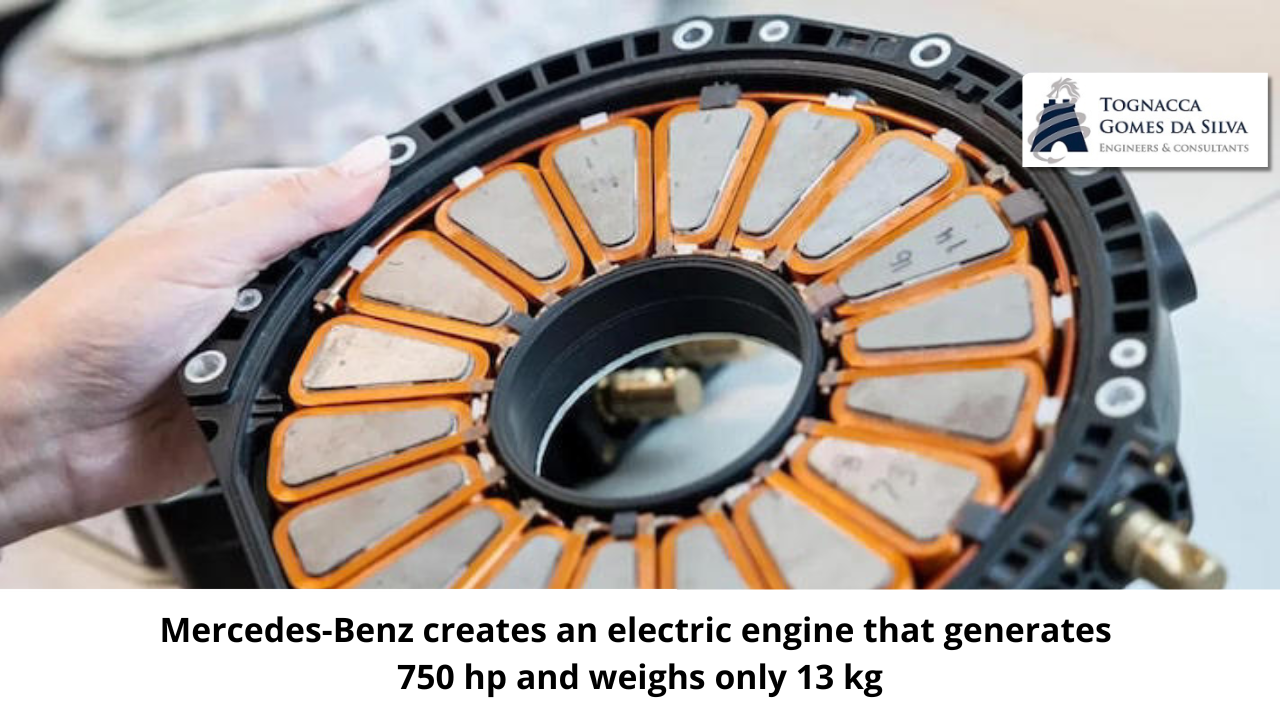



What was known about the potential of axial flow electric motors gained even more strength. Yasa, a British subsidiary of Mercedes-Benz and supplier of these engines to brands such as Ferrari and Lamborghini, has just revealed a new extremely powerful and, at the same time, very light engine.
With only 13.1 kg, the engine can generate 550 kW, the equivalent of 748 hp. This sets new power density records, with an impressive 42 kW (or 57 hp) per kilo. This number is almost three times higher than the current average of electric motors. To get an idea, the three-cylinder combustion engine used in the Toyota GR Corolla (G16E-GTS), weighs 110 kg (dry) and delivers 304 hp, resulting in only 2.76 hp per kilo.
The differential of Yasa’s engine is in axial flow technology, different from the more common radial flow technology. This approach allows you to drastically reduce the size and weight of the engine, while maintaining or even exceeding the power levels of the heavier and bulkiest thrusters.
Set is still a prototype
For now, the new 13.1 kg engine is still a prototype. Yasa states that the most impressive thing is the fact that it does not use exotic materials or technologies such as 3D printing, which should facilitate the transition to serial production.
Despite this, the main candidates to receive this type of engine continue to be super sports cars and luxury cars, mainly for reasons of cost and scale.
Yasa supplies units to several supercar manufacturers
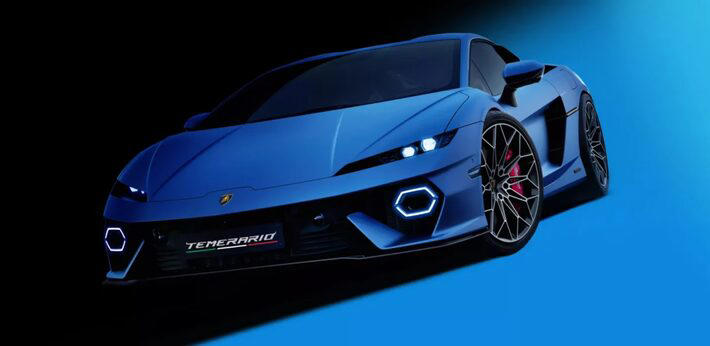
Lamborghini Temerario is the brand’s new sports car Photo:
Axial flow engines are already transforming the automotive electrification scenario. Yasa equips high-performance models such as Koenigsegg Regera, Ferrari SF90 and 296 GTB, in addition to the latest Lamborghini Revuelto and Temerario. The Yasa Axial Flow Engine concept, with its 1360 hp, also uses this technology, which makes sense considering that Yasa has belonged to Mercedes-Benz since 2021.
The company also highlights the possibility of integrating its engines directly into the transmissions, maintaining lightness and performance. In practice, this paves the way for a new concept of architecture in hybrid and electric vehicles, thanks to the compact size of these engines.
( fontes: msn )