


How do you see yourself in ten years?
Traditionally, this question usually provokes reflections on career, family or personal ambitions. But every day, we move faster towards a world different from the traditional one – which will force us to completely reimagine our lives.
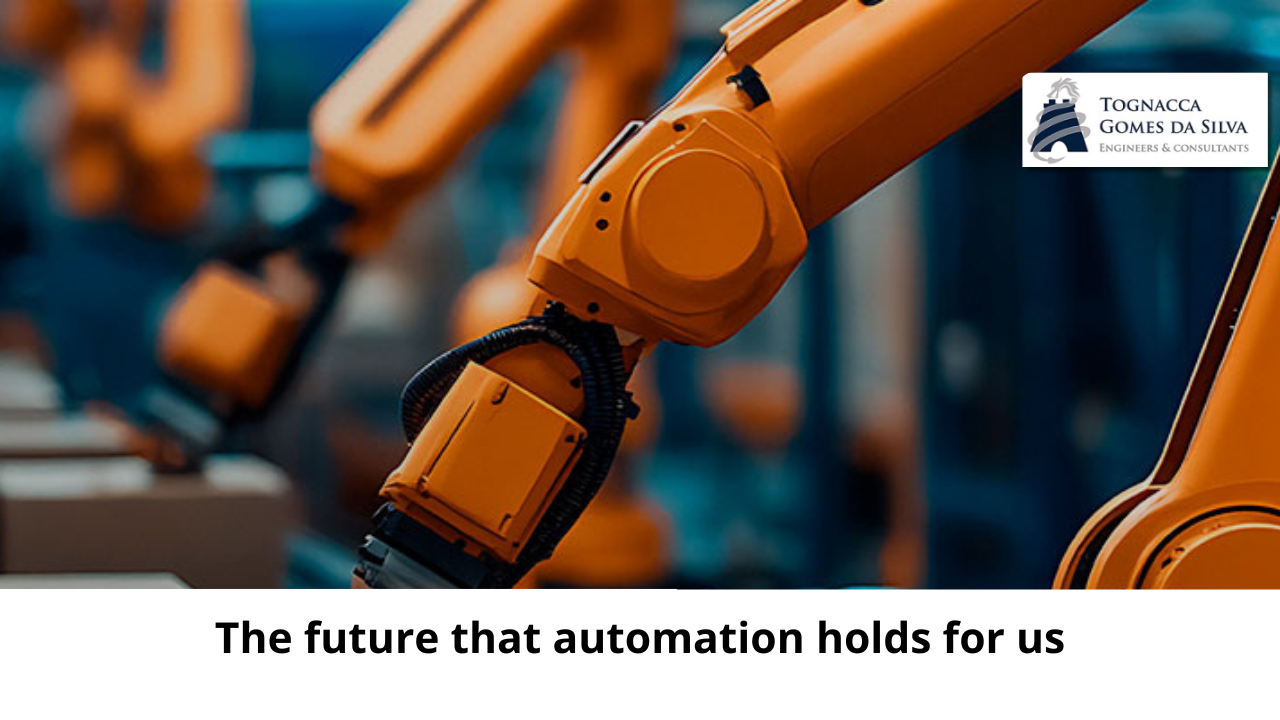
One of the biggest drivers of these changes is automation. Driverless cars, which we already see circulating in cities around the world, are a more visible layer of this advancement. Behind the scenes, robots and intelligent systems are already making it possible to assemble cars in seconds – 76 seconds, to be exact, in the case of a Xiaomi factory.
Humanoid robots are another aspect, and perhaps one of the most intriguing. More than performing manual and repetitive processes, as we already see in industries, these versions propose to interact with humans and take on more complex and subjective tasks. Tesla Optimus, for example, was presented by Tesla as a potential assistant in household or educational tasks. Atlas, from Boston Dynamics, was designed to act in risk situations, such as disasters.
Expectations for the spread of this type of machine are high. In a report published last year, Goldman Sachs estimated that the total addressable market for humanoid robots could reach $38 billion by 2035, with 1.4 million units sold. The amount is six times higher than the institution had projected in 2022, when it calculated that the sum would be $6 billion or more within 10 or 15 years.
Despite the market’s apparent optimism, you may be wondering how realistic the prospect of seeing robots on the streets and in our homes in the near future is. After all, we’ve seen them in science fiction films for decades, and some attempts to introduce them into the real world have failed. One emblematic case is the Pepper robot, launched by Softbank in 2014, with the promise of “reading human feelings” and working in environments such as schools, stores and hospitals. In 2021, after producing just 27,000 units, the Japanese conglomerate ended production due to low demand.
Some factors contribute so that recent (and future) incursions in this area are more promising than the previous ones. Goldman Sachs lists some of them by justifying the elevation of its market projections: advances in Artificial Intelligence, greater availability of components and growing investments by companies and governments in the sector. The way different technologies combine and evolve together, as we will see below, also drives this and other innovations.
Merging of mechanisms
Two concepts are important to understand this phenomenon: the confluence and convergence of technologies. The first occurs when different resources coexist and interact, such as a cell phone that combines camera, GPS and internet. The second goes further, merging technologies to create something new, such as virtual assistants that use Artificial Intelligence, voice processing and machine learning to offer personalized answers.
Another widely popular example of convergence is ChatGPT. Its gears, composed of neural networks, GPU (Graphics Processing Units) processing and Large Language Models, are capable of analyzing large volumes of data, understanding complex patterns and continuously improving their responses. In the context of robots, this type of combination allows not only to develop more versatile and efficient models, but also to improve their learning process.
Nvidia, for example, has developed a virtual environment that simulates real-world situations for training machines. In its own experiments, the company managed to get one of them to learn, in 32 hours, the equivalent of 42 years of “life” experience. “The neural network’s brain learned entirely in simulation before being transplanted to control a robot in the real world,” details the company’s website, which now provides this type of resource to other players, such as Boston Dynamics.
Technology companies, it is worth noting, are not the only ones attentive to this issue. In a survey conducted by Capgemini with 2,500 executives from 17 countries and nine different sectors, from retail to telecommunications, 63% of respondents agreed that most of the benefits obtained with technologies will come from their convergence. Three quarters of them (76%) say this is a priority investment for their companies in 2025.
According to estimates made by ARK Investment in a report published last year, the convergence of disruptive technologies, such as AI and robotics, has the potential to accelerate global real GDP growth from an average of 3% in the last 125 years to more than 7% in the next seven years.
In addition to the availability – and combination – of advanced technologies, other factors are decisive for autonomous systems – especially robots – to extrapolate industrial plants and gain space on the streets and in homes. Reducing production costs is one of them. In a report on this market, Morgan Stanley estimates that, today, building a humanoid robot can cost between $10,000 and $300,000, depending on its configurations and applications. The institution believes, however, that the gain in efficiency and scale of this chain tends to significantly reduce costs in the coming years.
Another aspect is the need to make public and private spaces “robot-friendly”. It will be necessary to think about infrastructures that support them and give them autonomy, in addition to ensuring the necessary connectivity. With the popularization of autonomous vehicles, a portion of these problems will already need to be addressed. In this aspect, even Morgan Stanley points out that robots have an advantage: the possibility of being trained in virtual or controlled environments, instead of public spaces.
This series of advances, however, has a price that is not only monetary. As an article by UNEP (United Nations Environment Program) highlights, centers that house AI servers are large consumers of resources, such as water and energy. They also produce large amounts of electronic waste and rely on rare minerals, often extracted in a way that is harmful to the environment. The entity highlights that more forceful policies and actions are still needed to face this problem.
The future we are going to project
In addition to the complexities involved in the development of these technologies, there are also challenges of social, governmental and economic adaptation to this new scenario. In an article published on the World Economic Forum website, Maria J. Alonso, leader of the organization’s autonomous systems portfolio, lists three key points for the construction of what it calls the “responsible autonomous future”: control and security mechanisms, workforce qualification and strategic deployments.
The first point refers to the management of risks associated with the adoption of autonomous devices. Due to their potential to cause physical damage, they bring ethical and governance challenges in addition to those already observed in Artificial Intelligence. Hospital robots, for example, can fail during a critical procedure. Social robots, as the models more focused on interactions are called, can reproduce biases, reinforcing discrimination against minorities. There are also the implications of the development of autonomous weapons, capable of escalating conflicts and potential destruction.
In the economic sphere, it will be necessary to deal with the impacts of job replacement and transformation. Based on a methodology that evaluates the characteristics of jobs in the US, such as the presence of repetitive or dangerous activities and the wage costs involved, Morgan Stanley estimates that humanoid robots have the potential to take over about 8 million jobs in the country by 2040.
The sectors most exposed to this change, according to the analysis, are transport and storage, agriculture and mining, construction, manufacturing and health. In Alonso’s assessment, one of the ways to minimize the impacts is the development of training and requalification programs, aiming to prepare the workforce for new functions. She cites, as an example, truck drivers, who can assume functions of supervision or maintenance of autonomous fleets.
In the academic field, Erik Brynjolfsson and Andrew McAfee, authors of works such as “The Second Age of Machines” and “Machine, Platform, Crowd: Harnessing Our Digital Future”, propose similar discussions. In their view, technological advancement has the potential to generate economic prosperity, but if it is not accompanied by adequate policies, it can lead to what they call “great decoupling”: while productivity and profits grow, employment and average wages stagnate or retreat.
In 2013, McAfee was already worried about the future of work in the face of the technological advances expected for the following decades. “When all these science fiction technologies are deployed, what will we need all the people for?” he said in an interview with MIT Technology Review. Far from being against innovations, he and Brynjolfsson argue that technology is a neutral tool: its effects depend, above all, on the human decisions that shape it.
In 2013, McAfee was already worried about the future of work in the face of the technological advances expected for the following decades. “When all these science fiction technologies are deployed, what will we need all the people for?” he said in an interview with MIT Technology Review. Far from being against innovations, he and Brynjolfsson argue that technology is a neutral tool: its effects depend, above all, on the human decisions that shape it.
In the individual sphere, the impact of these advances will also depend on some choices. There will be those who decide not to have a robot dedicated to household chores, even if they have the financial conditions to do so. And there will be those who will embrace this and other innovations as soon as they are available – the famous early adopters. If imagining living with these machines sounds utopian, just think that innovations, such as virtual assistants and video calls, have also been elements of sci-fi.
Today, perhaps, the central question is no longer whether we will live with robots, but how – and by whom – this coexistence will be shaped. Despite the imminent challenges, there are reasons to be optimistic. In the book “Abundance: The Future is Better than You Imagine”, Peter H. Diamandis and Steven Kotler argue that exponential technologies, such as AI and automation, are tools that can democratize access to essential resources and expand human possibilities. They recognize the risks of the transition, but bet that, with inclusive education and policies, automation will be a pillar of a future of shared prosperity. As Diamandis summarized in a TED Talk, “abundance is not about creating a life of luxury for everyone on this planet. It’s about creating a life of possibilities.”
(fonte: MIT Technology Review)