



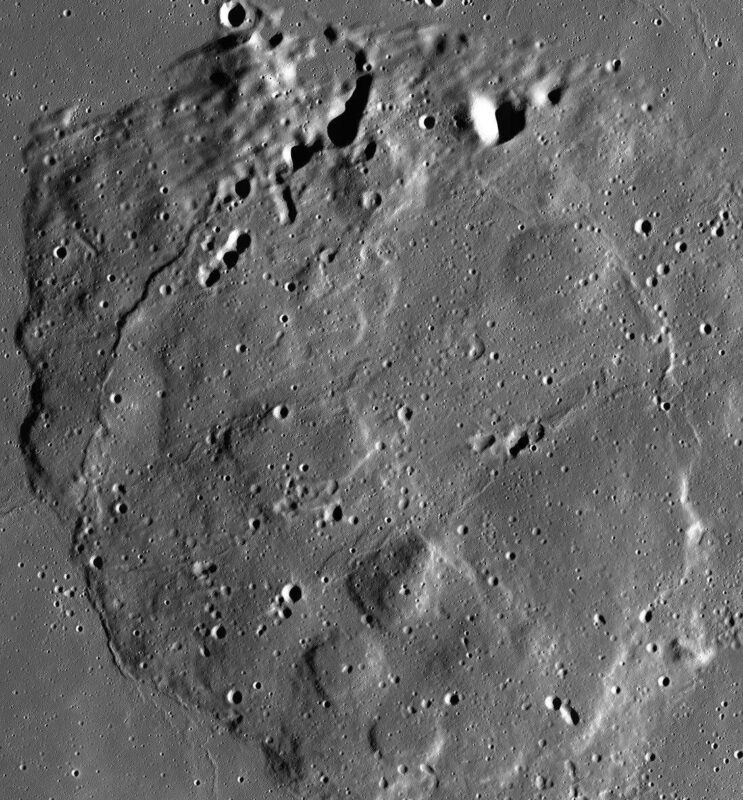
New NASA AI uses 2 million images to find water on the Moon
Lunar exploration has just taken an unprecedented technological leap in September 2026. NASA announced the development and successful application of a new Artificial Intelligence system capable of mapping water ice deposits on the Moon with never-before-seen precision. Powered by a massive database containing over 2 million images, the tool represents a fundamental pillar for the success of future crewed missions and the establishment of a permanent lunar base under the Artemis Program.
The Challenge of Permanently Shadowed Regions
Historically, the search for water on the lunar surface has been concentrated at the poles, especially in the so-called Permanently Shadowed Regions (PSRs). The interior of these deep craters never receives direct sunlight, harboring extreme temperatures that drop to -240 °C. Due to the complete absence of light, traditional optical imaging results in noisy data that is exceptionally difficult to interpret. The American space agency’s new AI model was specifically designed to “see in the dark,” processing scattered photons that reflect off the crater rims and faintly illuminate the frozen floor.
Training with the LRO Database
To train this deep neural network, NASA software engineers and astrophysicists utilized over 2 million images captured over more than a decade by the Lunar Reconnaissance Orbiter (LRO) probe. Processing this colossal amount of data brought forth striking technical innovations:
- Advanced Noise Filtering: The machine learning algorithm was exhaustively trained to distinguish thermal noise and camera artifacts from the actual reflective signatures of ice.
- Multidimensional Topographical Mapping: The Artificial Intelligence cross-references three-dimensional elevation data with thermal maps to identify the densest and most accessible reservoirs.
- Computational Efficiency: What would have taken decades for a global team of human astronomers to analyze manually was processed by the AI in just a few weeks using high-performance supercomputing clusters.
Direct Impact on the Artemis Program and the Space Economy
The discovery and precise mapping of water reserves are non-negotiable prerequisites for the long-term sustainability of space exploration. Lunar water will not only be used for human consumption by the crews. It is the vital raw material for producing rocket fuel—through electrolysis that separates hydrogen and oxygen—and for life support systems. The application of In Situ Resource Utilization (ISRU) will drastically reduce the billions of dollars that would otherwise be spent transporting heavy supplies out of Earth’s gravity well.
The Future of Autonomous Exploration
With the validation of this new Artificial Intelligence architecture, NASA is already structuring plans to integrate optimized, compact versions of this algorithm into the onboard computers of upcoming surface exploration rovers. Robotic vehicles will have the capacity to adjust their navigation routes in real-time, relying on AI predictions to drill and collect the purest ice samples, marking the beginning of a new and decisive era in the autonomous exploration of the Solar System.
